Ensuring driver competence and legal compliance with regular licence checks
Employers have a responsibility to make appropriate checks to ensure anyone they ask to drive for work is legally able and competent to do so.


Employers have a responsibility to make appropriate checks to ensure anyone they ask to drive for work is legally able and competent to do so.


Marion Hanson
Marketing Executive
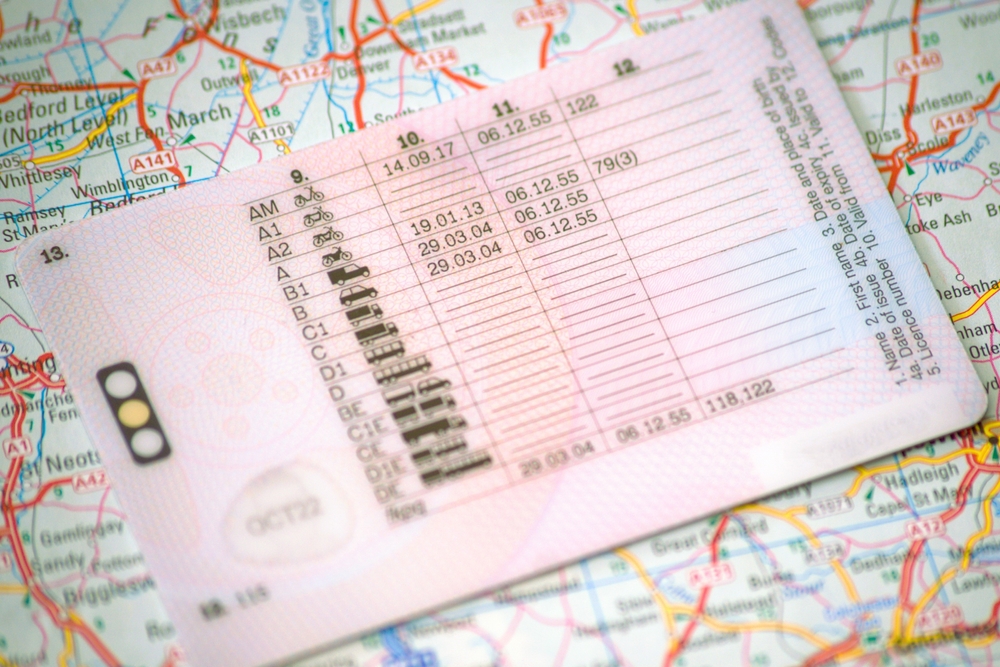
The most obvious checks are to see if drivers have a valid driving licence, if they have any penalty points, and whether they are eligible to drive the class of vehicle required. It may seem straightforward, but you would be surprised at how many don’t check this.
The Road Traffic Act 1988 states that it’s an offence for a driver to drive without a valid licence. The Act also states that it is an offence for a person or organisation to permit a driver to drive without a valid licence and therefore puts responsibility on businesses as well. Having a robust system in place to check drivers’ licences will help prevent you from hiring someone who isn’t eligible to drive for you.
In this article, we highlight the necessary driver checks that must take place in order to keep your drivers, your business and other road users safe. Our article ‘Fleet compliance explained’ goes into detail on how you can overcome compliance challenges.
Typically, a driver will have their licence suspended if they get to 12 penalty points, however, a driver can argue in court that losing their licence would cause undue hardship and request that they be allowed to continue driving with more than 12 points.
Previous Freedom of Information (FOI) requests sent to the DVLA show that there are thousands of drivers in the UK driving around, quite legally, with more than 12 points on their licence.
Following one such request the DVLA provided figures (accurate as of August 2024) showing 10,000drivers with more than 12 points and one man from Flintshire in North Wales holding a valid driving licence with a staggering 229penalty points on their licence.
Another FOI request, this time from IAM RoadSmart, yielded data from the DVLA (data supplied in December 2020) showing over 92,000 drivers with 9-11 penalty points. That’s just one offence of a ban.
An example that illustrates this risk perfectly involves a man who, having racked up 54 points, convinced a judge to let him keep his licence in order to look for work as a mobile tyre fitter – work which would entail some unwitting employer entrusting him with a shiny company van and tools worth in the region of £40,000. Failure to check licences therefore, leaves you open to hiring people like this.
The driving licence checks will also highlight whether drivers need glasses or have any other medical issues that may affect their ability to drive. Find out whether employers are responsible for their drivers' eye tests and health in our article Are employers responsible for driver eye tests & health?
During the initial hiring process, the first driver checks should include:
It's quick and easy to check someone’s driving licence information using the DVLA’s website. All you need is the driver's permission, the last 8 characters of their driving licence number and their driving licence check code. This will then inform you of any penalty points or disqualifications that they may have, as well as the types of vehicles that they can drive.
Having made your initial driver checks to ensure your drivers are all correctly licensed and medically fit to drive, it’s important to maintain those checks over time.
For all the same reasons we don’t want to employ an unsuitable driver, we need to keep the checks up to date to make sure none slip through the net later on while they’re working for us.
Every year, tens of thousands of drivers have their licences revoked for a variety of offences, while tens of thousands more have to surrender their licence for medical reasons. Regular checks will pick these up.
Licences should be checked at least annually directly with the DVLA. Many employers check licences more regularly if drivers have accumulated points, or introduce thresholds – for example, some companies check drivers with a certain number of points, or those that driver higher mileages, on a more regular basis.
Your ongoing management of drivers should include
The point of an ongoing driver record keeping system is to ensure you do everything you need to do in order to meet your legal obligations, keep your drivers safe and protect the business in the event of an incident – and that all of these things are recorded as they happen.
This is important when communicating policy updates or where additional training is required. If your drivers are in specialist vehicles, carrying heavy loads or towing, then it provides a vital record that any additional training that was required has been successfully delivered.
It is even more important where high-risk drivers, such as those with multiple speeding offences or a poor collision record, need to be identified and action taken.
Remember, comprehensive driver record-keeping will help you:
At Motia, we offer a comprehensive range of compliance and maintenance solutions for your fleets, from real-time tracking tools and telematics to easy-to-use platforms for vehicle and driver checks, audit trails, and reports.
Discover how Motia can help you to improve your fleet management in our ‘Fleet management guide’ or contact us today to discuss how we can help you stay on top of your fleet compliance and vehicle maintenance checks.


Providing Fleet Solutions to optimise operations, cut costs, and keep your business moving.










.jpg)





























































.jpg)