How often should you change your tyres?
Determining the optimal time to replace tyres has significant cost, safety and compliance implications for fleets.


Determining the optimal time to replace tyres has significant cost, safety and compliance implications for fleets.


Simon Pavey
Website Marketing Manager
Replacing your tyres too early increases fleet costs and waste, while replacing them too late increases the risk of legal breaches, vehicle downtime and compromised safety.
In this article, we explain how often your tyres should be replaced depending on tread depth, duty cycle and fleet priorities.
You can also read our ‘Ultimate fleet maintenance guide’ for our tips on how to effectively manage maintenance.
In the UK, the legal minimum tyre tread depth is 1.6mm, measured across:
Fleets typically operate a policy of 2mm, although organisations such as safety charity Royal Society for the Prevention of Accidents (RoSPA) and the National Tyres Distributors Association call for tyres to be changed at 3mm.
Falling below the legal limit exposes fleets to fines, penalty points, insurance risks and compliance failures. So how can a fleet manager decide when the optimum time is to replace tyres on their vehicles?
“As always, it’s a balance between operating costs for a fleet and the operational needs of the fleet,” says Lee O’Neill, operations manager at Venson Automotive Solutions.
The main factors fleet managers need to consider are compliance, safety, cost and environmental impact. Below, we take a look at these in further detail.
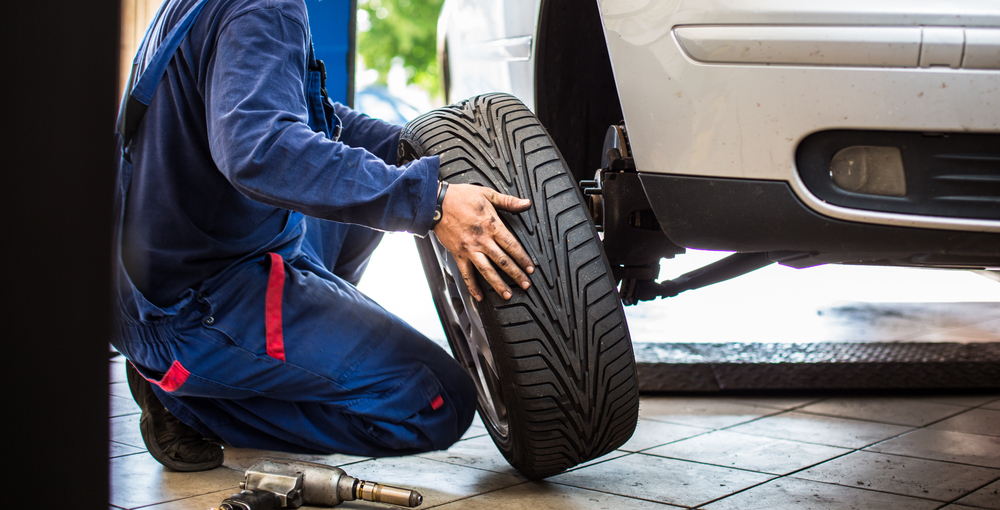
Tyres are the vehicle’s only point of contact with the road, as tread depth decreases:
“Too often tyre management is overlooked, and there is a tendency to forget that the only thing keeping the car on the road is the palm-sized contact patch of the tyre,” says David Howe, fleet and retail channel manager for Goodyear Dunlop.
Discover employers’ responsibilities for tyre safety and how our Vehicle Safety Checks service enables drivers to report any defects in our ‘Tyre safety guide’.
Frequent tyre replacement increases:
Fleets with strong corporate social responsibility (CSR) or ESG targets often factor tyre longevity into replacement policies.
Replacing tyres as soon as the tread depth reaches 3mm or 4mm improves safety but increases fleet operating costs. Extending tyre life closer to 2mm reduces the cost per mile, while running tyres too close to 1.6mm increases the risk of emergency replacements, downtime and penalties.
This is why the best solution is planned replacement, not reactive changes.
While there is no one-size-fits-all answer, ensuring that tyres are checked daily and are replaced no later than 2mm should help to keep your fleet running in optimal conditions.
For most fleets, a 2mm policy provides the best balance between safety, compliance, costs and environmental responsibility.
Although for maximum safety, you may prefer to replace your fleet tyres at 3-4mm.
As long as your tyres are monitored closely and replaced proactively, you should be meeting your responsibility to keep your fleet safe.
At Motia, we take driver and vehicle safety seriously. That’s why we offer a range of commercial fleet services that are designed to improve driver safety and provide cost savings.
These include advanced Telematics, streamlined Vehicle Safety Checks, and hassle-free Vehicle Maintenance solutions.
Find out how we can help or contact us online for more information.


Providing Fleet Solutions to optimise operations, cut costs, and keep your business moving.










.jpg)




























































.jpg)