

Simon Pavey
Website Marketing Manager
Commercial vehicles are essential in supporting UK businesses from HGVs that transport essential raw materials to taxis that help people to reach business meetings on time, there are countless ways in which commercial vehicles empower businesses to operate and connect with others.
Crucial to the usage of commercial vehicles, though, is the practice of upholding proper safety standards. After all, there’s a very real and immediate danger involved when cars are driving along a road, given it’s difficult for them to stop quickly while travelling at high speeds. Maintaining proper safety standards with regular vehicle maintenance checks, HGV daily walkaround checks, telematics and servicing helps to ensure that everyone on the road stays safe. Discover how Motia can help businesses to maintain commercial vehicles here.
In this article, we’ll explain car stopping distances and examine how commercial fleet operators can improve driver safety. We hope to help fleets equip drivers with correct, practical, and up-to-date information.
Find out more information on tackling duty of care obligations for fleets in our article ‘The importance of fleet duty of care’.
Stopping distance is the time taken for a vehicle to transition from a state of moving to being at a complete stop. Understanding the physics of a car is one of the first things one learns as a beginner driver, and it’s applied every time you gently break to pause at traffic lights.
More commonly, though, we use the term stopping distance to describe the exact time needed to stop a vehicle in an emergency situation. This could be brought about, for example, by a pedestrian suddenly running out into the road, or a traffic accident. Drivers should know their stopping distances at all times to maximise safety both for themselves and those around them.
It’s also important to be aware of thinking distance. Naturally, a driver must first perceive whatever road hazard they’re facing, process it, and then choose to hit the brakes – and this is an important part of the stopping distance formula. Ideally, drivers will allow themselves adequate ‘thinking distance’ by putting distance between themselves and other drivers, and abiding by the speed limit.
While there’s no simple formula to work out how stopping distance is calculated. The main components involved are to:
The exact stopping distance will always vary from vehicle to vehicle, and the stopping distance itself comprises thinking distances and braking distance elements. General stopping distances, however, are a part of modern driving theory tests and should be known by all drivers.
This is especially true for drivers of commercial fleets, and commercial fleet operators may do well to ensure, firstly, that drivers have an accurate understanding of stopping distances based on the vehicles they’re using (which may vary drastically for vehicles carrying heavy loads), and have the right tyres and brake technology to improve stopping distances.
Our telematics devices and services, such as the advanced Motia Telematics portal, can score your driver's behaviour for every trip, reducing points for speeding, harsh cornering, harsh braking, and harsh acceleration. Find out more information on what telematics vehicle tracking technology tracks here.
To get a more accurate idea of stopping distances and to allow enough time between vehicles for thinking distance its important to know what factors can affect stopping distance.
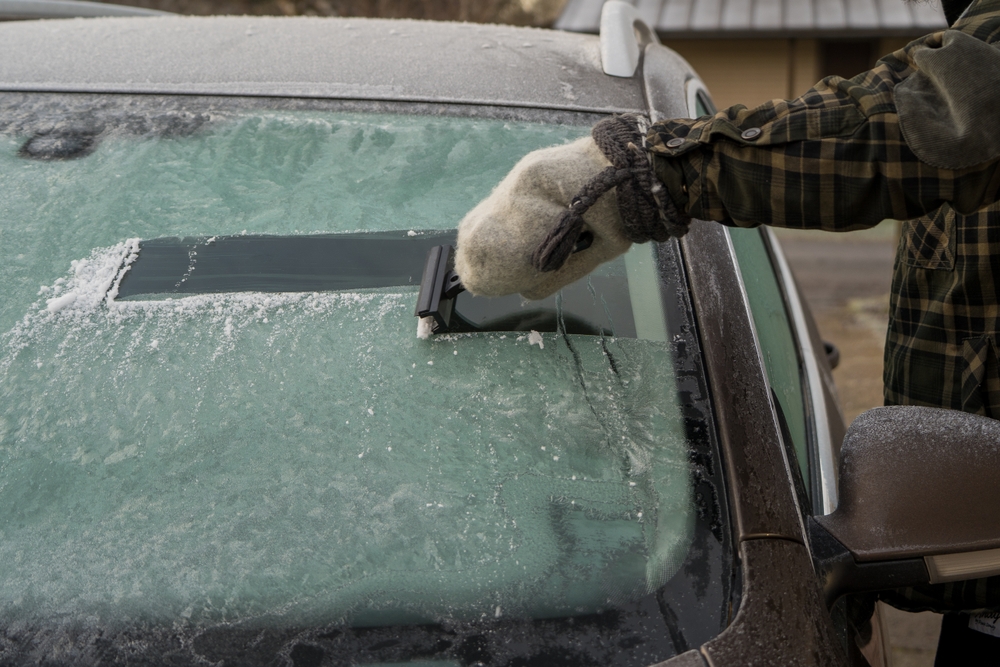
Ice on the roads can function in a comparable way to low tyre tread, reducing the car’s grip on the road and limiting the control drivers have over their vehicles. This can seriously impact the delivery time on commercial routes, and so our tip for fleet operators would be to encourage drivers to plan their routes around roads that are likely to be well gritted and safe in the face of challenging winter driving conditions.
It’s estimated that icy roads could increase a vehicle’s stopping distance by up to ten times its non-icy equivalent. What this means in real terms is that if you are driving at 70mph (with a standard stopping distance of around 96 meters), it could take you almost a full kilometre to fully slow your car down to a stop. In that time, over half a mile of travel, there is a high risk of control being lost or the vehicle colliding with other travellers on the road.
Fleet drivers should be encouraged to drive with the highest level of caution if roads are icy, and depending on the severity of such conditions, unnecessary journeys should not be made.
Our tip for fleet managers: Develop a framework for route planning in icy conditions, as opting for better travelled, busier, and slightly slower routes that improve safety may be more financially savvy in the long run than taking risks with quick, icier roads that could result in damage. Find out how fleet management software can benefit your business and help you with route planning here.
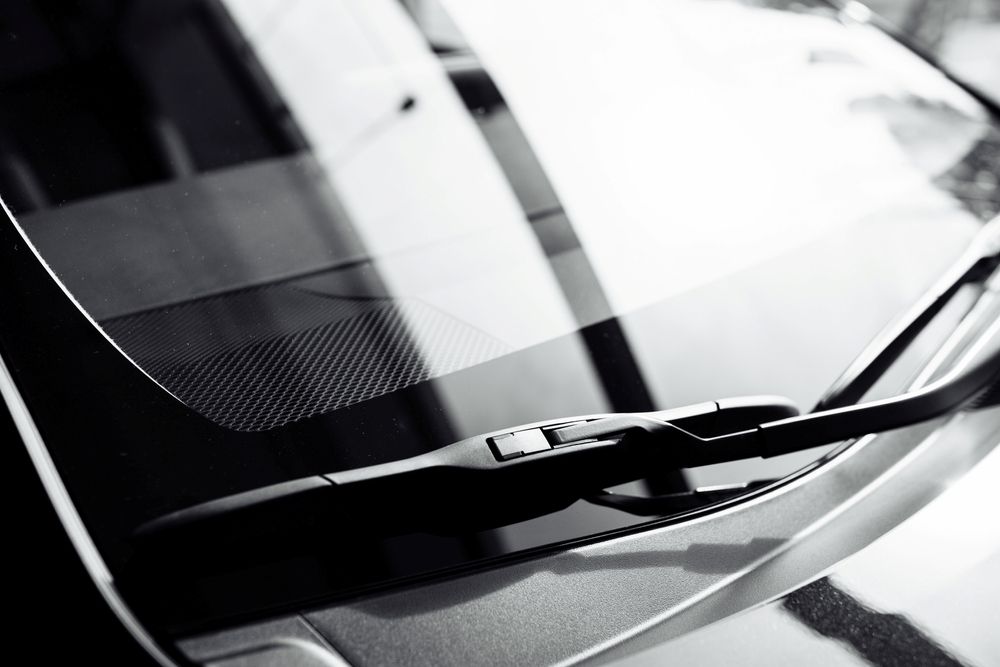
Rain can impact a driver’s thinking distance by reducing visibility, thereby making it harder to spot and acknowledge hazards on the road. Poor visibility can of course be countered, to some extent, with wiper blades. But realistically, it’s very difficult to plan routes around the rain as weather can change quickly.
Consequently, fleet operators may do well to take weather conditions properly into account when assessing how efficiently drivers are planning routes – as having drivers feel pressured to rush in dangerous conditions can not only have an impact on mental health, but potentially pose a threat to physical health too.
Stopping distance approximately doubles in rainy conditions, which means that a car travelling at 70mph can expect to travel around 180 meters before coming to a stop. This is a significant change in stopping distance, and to accommodate such a change fleet drivers should be reminded to stay alert, keep adequate space between themselves and the vehicles in front, and to maintain a safe and legal speed.
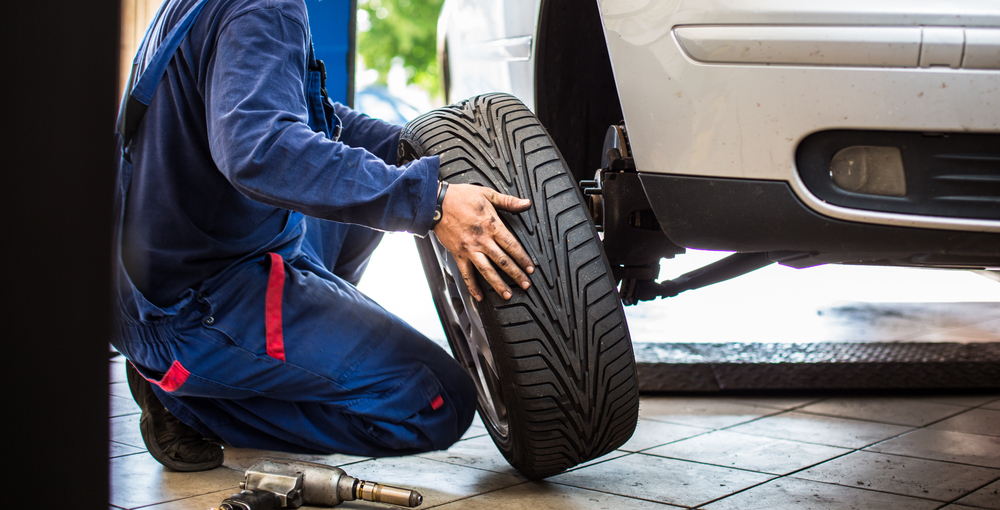
The quality of a car’s tyres and brakes can drastically affect its stopping distances. Naturally, as tyre technology evolves each year, driver safety improves – and any tyres that are upward of ten years old (including spares) should be replaced immediately.
Similarly, brake pads wear down over time, and so it’s important that drivers can spot the warning signs that this may be an issue, which can include:
Drivers could also manually check that there’s adequate brake pad remaining – with anything less than a quarter of an inch potentially proving dangerous. With tyres and brakes, it’s crucial that drivers are both aware of and adhere to legal safety limits. Find out how to keep your tyres safe in our tyre safety guide.
We’ve already covered how different road conditions can affect braking distance, and it’s also worth considering that drivers could have a diminished thinking distance if, for example, they are suffering from fatigue or tiredness. As a rough guide, however, in perfect conditions, you may find that stopping distances are roughly as follows for a medium to large-sized car with quality tyres.
Stopping Distance In Feet
Stopping distance at 70mph 315ft
Stopping distance at 60mph 240ft
Stopping distance at 50mph 175ft
Stopping distance at 40mph 118ft
Stopping distance at 30mph 75ft
Stopping distance at 20mph 40ft
This is based on guidance from the Highway Code, using an average vehicle length of four metres. It isn’t, however, a one-fits-all solution that can tell you the stopping distance of any vehicle, and drivers should take the external factors we’ve covered into account, as well as the weight of their load.
Some action points for commercial fleets to improve stopping distance and increase driver safety include:
A good way to visualise just how far car stopping distance is to consider how many average car lengths it will take a vehicle to stop at various speeds. For example, for a car travelling at 20mph you can expect a stopping distance of three car lengths. This distance quickly jumps up and the stopping distance of a car travelling at 70mph will take 24 car lengths to come to a complete stop.
At Motia, we take driver safety seriously. That’s why we offer a range of commercial fleet services that are designed to improve driver safety and provide cost savings.
Services include:
Motia Telematics: a smart telematics system that’s tailored to your business’ unique needs. Our telematics software can improve safety for your drivers and security for your vehicles. Discover how fleet telematics supports driver safety here.
Vehicle safety checks: which allows drivers to carry out vehicle checks on their mobile phones. This data then feeds back into a manager’s portal, enabling you to check that vehicles are safe to drive and that legal requirements are met.
Vehicle maintenance: we offer an online, pay-as-you-go system that gives you access to pre-negotiated repair and maintenance rates at thousands of UK garages, meaning any faults can be resolved quickly without breaking the bank.
Contact us to see how we can help you improve driver safety and save on fleet and fuel costs.


Providing Fleet Solutions to optimise operations, cut costs, and keep your business moving.










.jpg)








































.jpg)